
Our Story



THE OLD MILL
Circa 1830 • A Mill on the Little Pigeon
More than one hundred and ninety years ago, William Love built a gristmill on the banks of the Little Pigeon River to serve the mountain families who farmed this valley. His father, Isaac Love, had already established an iron forge nearby in 1817. That forge became the first industry on the river. Its glow was said to be visible from surrounding ridges.
By 1842, the mill had become a true community center. The first post office in what would become Pigeon Forge was established inside the mill, and William Love became the first postmaster. One of his first duties was to name the town. He chose Pigeon Forge for two reasons. Passenger pigeons once filled the sky by the hundreds of thousands as they migrated south. And the iron forge next door had already given the valley a landmark that locals knew well.
Families came to the mill to grind grain, share news, and enjoy the river. Children played along the banks while the wheel turned steadily beside them. The mill quickly became the heart of a growing settlement.

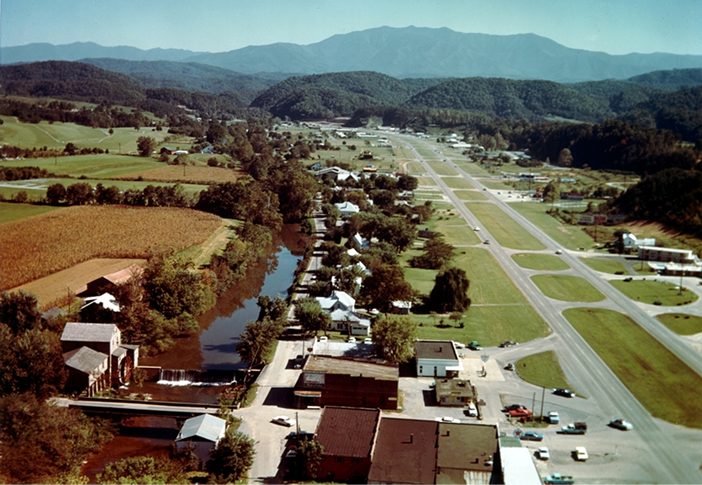
1850s to 1860s
New Owners and New Work
In 1849, the Love family sold the forge and mill to John Sevier Trotter. Trotter expanded the property and added a sawmill. By the time of the Civil War, the forge no longer operated, but the mill continued to serve the community. During the war years, the mill’s strong frame and water power took on new roles. Cloth and uniforms for Union soldiers were produced here, and the mill offered shelter during uncertain times.

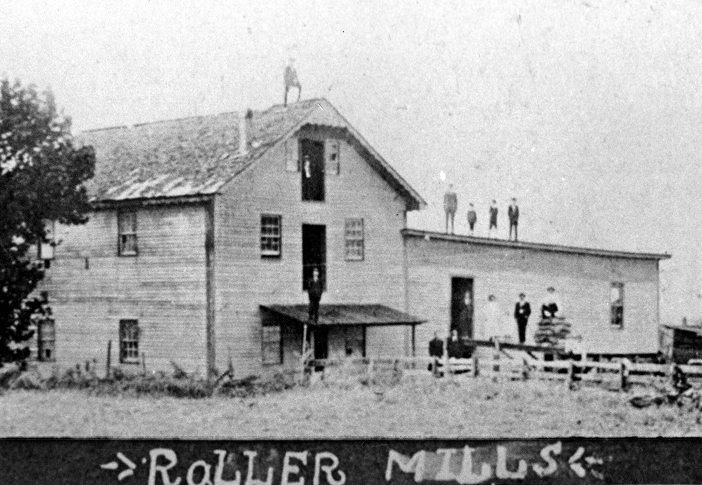
Circa 1920
Flood and Rebuilding
The Little Pigeon has always been a gift and a challenge. In 1920, a powerful flood tore away the mill’s lower floor and its wooden wheel. The community rebuilt with determination. Led by owner Benjamin Franklin Stout, the mill was raised, a new wheel installed, and operations resumed. That resilience became part of the mill’s lasting identity.

Early to Mid 1900s
A General Store and Daily Life
Through the early 1900s the mill’s lower level served as a general store operated first by the Stout family and later by the Simmons family. Locals came for flour and meal, farmers traded grain, and neighbors stopped in for staples and conversation. The river remained a gathering place for fishing, swimming, and skating in winter. The sound of rushing water and the steady rhythm of the wheel marked the pace of daily life.

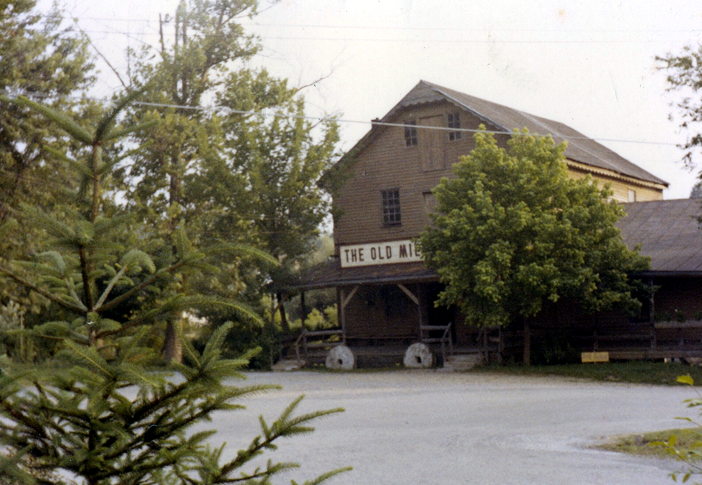
1970s
Recognized and Preserved
In 1975, The Old Mill was added to the National Register of Historic Places as one of the oldest continually operating gristmills in the United States.
By the late 1970s, three local families purchased the mill and surrounding properties from the Stout and Simmons families. Their goal was to keep the mill working and preserve the traditions that had grown up around it. They envisioned not a museum but a living landmark where food, craft, and community could continue to thrive.

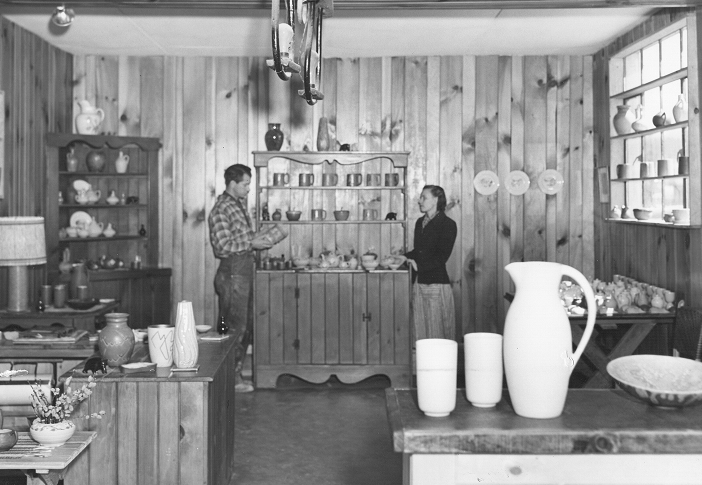
1993
The Old Mill Restaurant
In 1993, the families built a restaurant beside the mill using old timbers where possible. They called it the Cornflour Restaurant. When the families purchased the mill and the connected General Store outright in 1995, the restaurant was renamed The Old Mill Restaurant and restoration of the entire property began.
The restaurant served Southern classics from the start. Fried chicken, chicken fried steak, biscuits, cornbread, and stone ground grits came from flour and cornmeal milled just steps away. Guests quickly fell in love with the broad windows overlooking the turning wheel and the Little Pigeon River. The Old Mill Restaurant is open for breakfast, lunch, and dinner, and now welcomes about nine hundred thousand guests each year. On busy days, the kitchen serves up to twelve hundred slices of pecan pie.
1990s to 2000s • The Art of Craft
The families who cared for the mill also carried forward the creative spirit of Pigeon Forge.
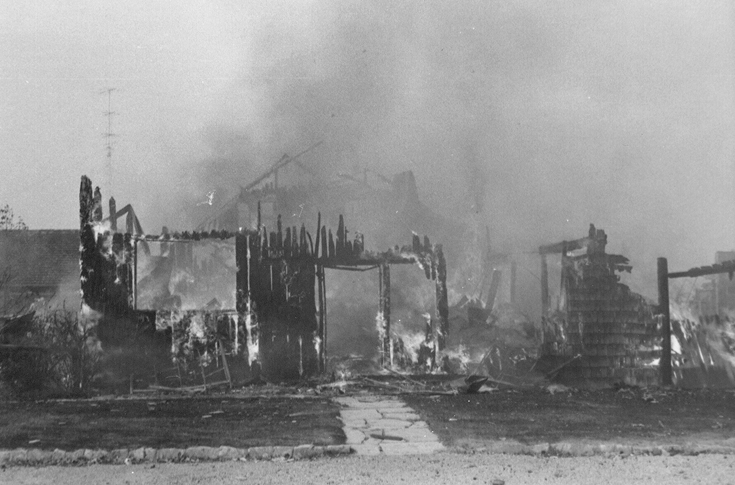
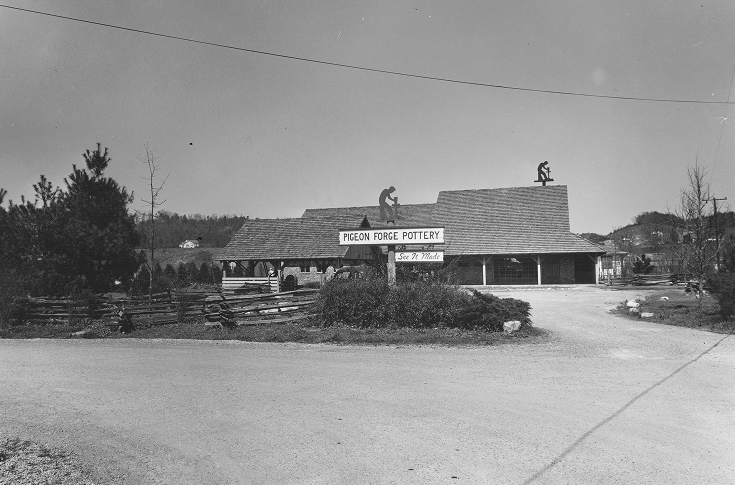
In the late 1940s, Douglas and Ruth Ferguson had founded Pigeon Forge Pottery across the street in a former tobacco barn. Their work became one of the region’s first tourist attractions. Their tiles, glazes, and designs shaped the artistic identity of the Smokies.
Decades later, The Old Mill family purchased the Ferguson property, restoring and reimagining it for a new generation. In 1999, they opened Pigeon River Pottery as a working studio. Local artisans still hand throw Tennessee clay and glaze each piece in colors inspired by the river. Guests can watch pottery take shape and take home a piece of Smoky Mountain craft.
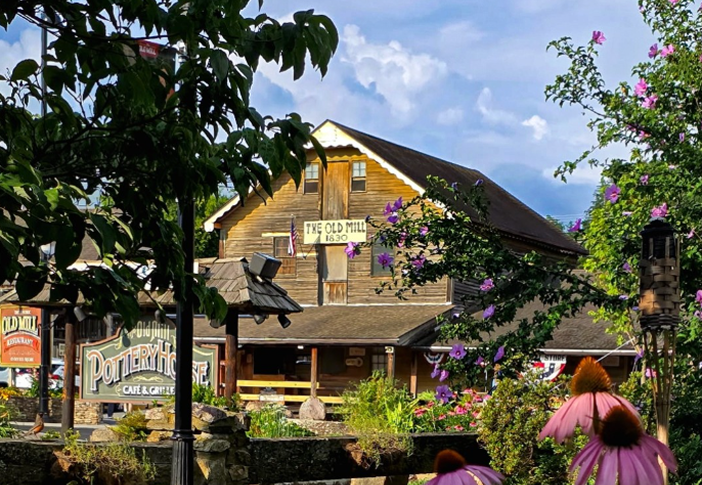
Across the street, the Fergusons’ former home, designed by architect Hubert Bebb and filled with Douglas Ferguson’s tiles and fireplaces, was restored and reopened in 2004 as The Pottery House Cafe. There, freshly baked breads and Southern dishes are served on plates and bowls crafted next door.
Next to the pottery studio stands the Old Forge Distillery, opened in 2014 inside the old mule barn where the Fergusons’ mule Cyclone once powered the clay mill. Today, distillers use grains from The Old Mill to create spirits rooted in local tradition.
By the early 2000s, The Old Mill Creamery, The Old Mill Candy Kitchen, and The Old Mill Farmhouse Kitchen had also opened. Together, these businesses preserve the valley’s heritage of food, craft, and hospitality.
Today • Still Turning
Nearly two centuries after William Love built the mill, its great stones still grind grain powered by the Little Pigeon River. The mill produces up to four hundred thousand pounds of corn each year, used in both The Old Mill Restaurant and The Pottery House Cafe. Potters still shape clay by hand. Candy makers stir copper kettles. Cooks and bakers prepare meals and treats from scratch each morning.
The Old Mill remains one of the most authentic experiences in Pigeon Forge. Guests can shop, dine, taste, and explore a place where history and creativity still work side by side. To visit is to step into a living story that continues to turn, just as it has since 1830.